
AI Agents & Intelligent Automation: How 2026 Is Redefining Software Development and Workflows
The year 2026 marks a turning point in how humans and machines collaborate. Software is no longer just a tool executed by human instruction — it’s becoming proactive, intelligent, and semi-autonomous. At the forefront of this transformation are AI agents and intelligent automation, reshaping both how we build software and how work gets done across industries.
In this deep dive, we’ll explore what AI agents are, why they’re gaining massive traction in 2026, how they’re changing development and business workflows, and what this means for professionals everywhere.
What Are AI Agents?
AI agents are autonomous systems that can:
-
Understand user goals
-
Plan multi-step tasks independently
-
Take actions on behalf of users
-
Adapt and learn from context
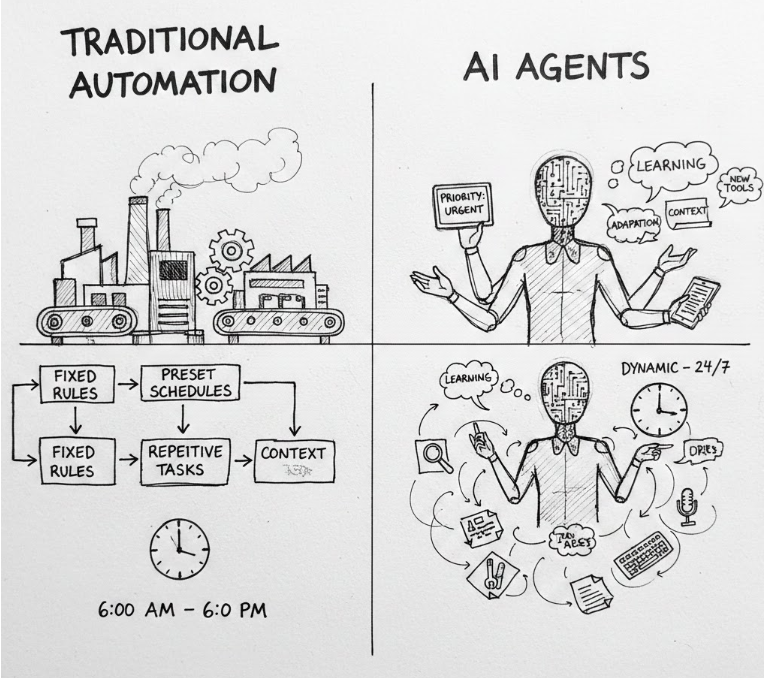
Unlike traditional software that needs explicit instructions for every task, AI agents can interpret goals and execute steps to achieve them. In 2026, this shift is more than hype — it’s becoming mainstream.
Unlike older automation tools, modern AI agents combine:
✔ Natural language understanding
✔ Context awareness
✔ Decision-making models
✔ Integration with multiple applications
This level of autonomy is transforming routine workflows into intelligent, adaptive processes.
Why AI Agents Are Dominating Tech in 2026
1. Productivity Gains Across the Board
AI agents reduce repetitive work in development, operations, support, and content creation. They can:
-
Generate code snippets
-
Autocomplete complex functions
-
Test and debug code automatically
-
Draft & optimize documentation
In many teams, tiny AI-assisted development teams are now outperforming much larger traditional teams. This trend is widely discussed among venture capital and startup communities in 2026, as businesses capitalize on efficiency gains.
2. Intelligent Workflows Are Becoming the New Standard
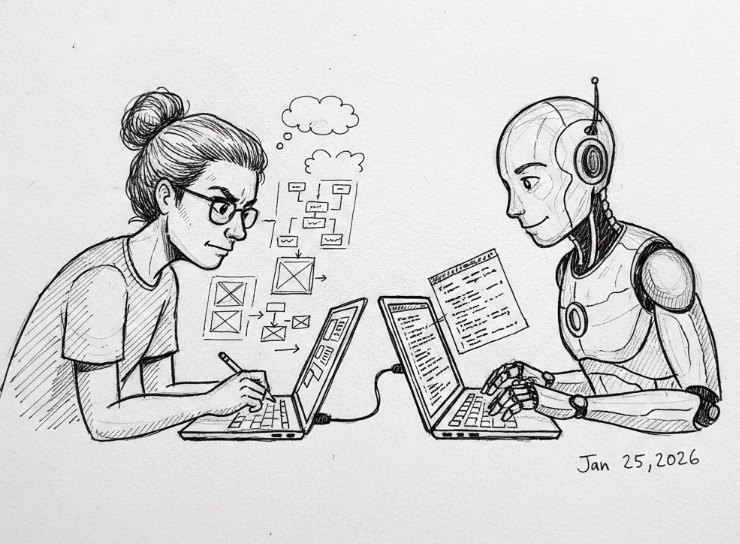
Rather than tools that simply execute commands, modern work platforms are embedding AI agents as active collaborators.
Instead of “find this” or “do that,” you now see:
-
“Plan my next sprint with objectives and constraints”
-
“Generate test cases based on recent commits”
-
“Summarize customer feedback and flag trends”
This move from manual tasks toward goal-oriented automation means software no longer just follows orders — it figures out how to get things done. Enterprise leaders are especially excited because this promises faster execution with fewer errors.
3. Context-Aware Assistance
Another reason AI agents are hot in 2026: they don’t just respond — they predict and propose.
For example:
-
In coding, agents suggest changes based on past project bugs.
-
In meetings, assistants summarize key points and schedule follow-ups.
-
In business workflows, automated reports and trend analyses generate without prompting.
This context awareness reduces cognitive load — letting humans focus on higher-order thinking rather than repetitive tasks.
Where AI Agents Are Being Used Today
🔹 Software Development
-
Code generation & review
-
Dependency checks & optimization
-
Automated debugging
-
Version history context insights
🔹 Enterprise Workflows
-
Human resources automation
-
Customer support ticket triage
-
Sequence planning in operations
-
Email & calendar intelligence
🔹 Personal Productivity
-
Task planning
-
Reminder scheduling
-
Prioritizing work based on deadlines
🔹 Business Insights & Decision Making
AI agents can analyze datasets, detect anomalies, and propose actionable strategies — no human referee needed to filter massive data streams.
All of these examples show a shift from tool-based action to autonomous task orchestration, making workflows more seamless and less prone to human error.
Benefits Over Traditional Automation
Traditional automation focuses on predefined rules:
-
If X happens → do Y
AI agents add a new dimension:
-
If goal is Z → figure out how to achieve it
This means they can handle:
✔ Unpredictable scenarios
✔ Multi-step planning
✔ Complex, context-rich data
✔ Learning from interactions
This makes AI agents powerful not just for repetitive tasks — but for strategic tasks too.
Challenges & Considerations in 2026
AI agents also bring challenges that professionals and businesses must address:
1. Governance & Transparency
With AI acting autonomously, executives want to know how decisions are made — not just that they work. This has prompted a rise in governance frameworks to audit AI decision trails.
2. Security
Agents with access to sensitive data must be carefully isolated to prevent misuse or breaches.
3. Job Roles Redefined
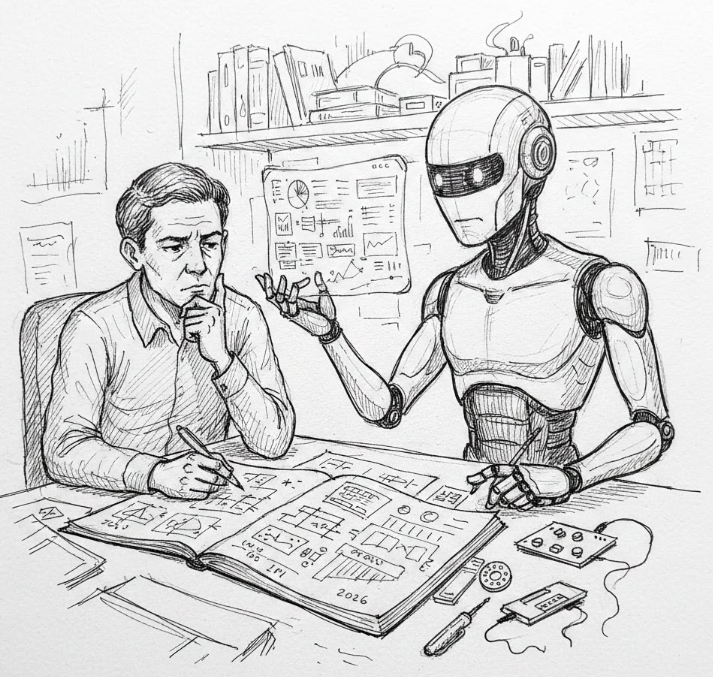
AI doesn’t replace humans — but it changes what humans do. The focus is shifting toward oversight, strategy, and creative problem solving.
What This Means for Developers and Tech Professionals
If you’re in tech in 2026, there are three keystones that will define your advantage:
1. Master AI Collaboration
Learn how AI agents work, how to integrate them responsibly, and how to supervise their outputs.
2. Focus on Problem Structuring
Instead of writing each step manually, focus on defining desired outcomes — and let intelligent systems fill in the actions.
3. Build Hybrid Skills
A mix of:
-
Domain knowledge
-
AI oversight
-
Human judgment
gives a competitive edge in an automated world.
Future Outlook
In 2026 and beyond, AI agents will continue scaling from:
-
simple assistants to
-
autonomous collaborators
This evolution is reshaping:
✔ Software development
✔ Enterprise operations
✔ Productivity tools
✔ Decision-making cycles
As this trend gains momentum, the focus will shift from manual tasks to strategic orchestration, fundamentally redefining the future of work and human-machine collaboration.
Conclusion
AI agents and intelligent automation aren’t just buzzwords — they are among the highest-searched, most impactful technology currents of 2026, driving real changes in how software is built, deployed, and utilized. Whether you’re a developer, business leader, or tech enthusiast, understanding this shift isn’t just useful — it’s essential for staying relevant in the modern tech landscape