On-Device AI vs Cloud AI: Which Will Power Everyday Apps in 2026?
Artificial Intelligence is no longer something hidden inside research labs or big tech companies. By 2026, AI will quietly power almost every app people use daily — from messaging and shopping apps to health trackers, cameras, navigation, and productivity tools. But behind this everyday magic, there is a major technical choice shaping the future of apps:
Should AI run directly on your device, or should it live in the cloud?
This brings us to one of the most important technology debates of this decade:
On-Device AI vs Cloud AI.
Both approaches have strengths, weaknesses, and very different impacts on performance, privacy, cost, and user experience. Understanding this difference explains why future apps will feel faster, smarter, and more personal than ever before.
What Is On-Device AI?
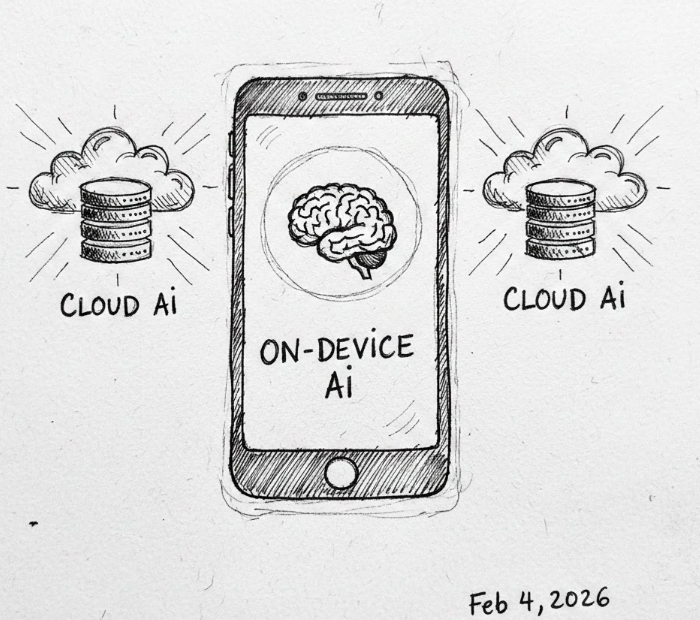
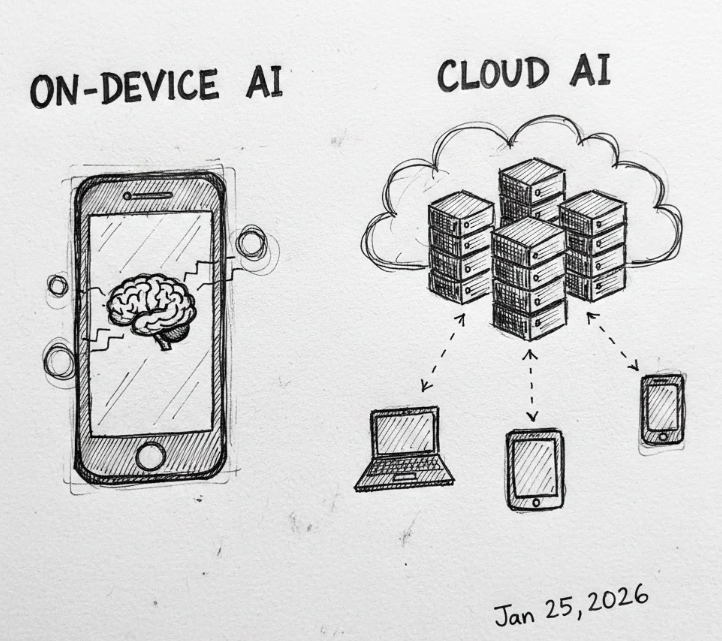
On-Device AI means artificial intelligence runs directly on the user’s device — such as a smartphone, smartwatch, laptop, or even a car system. The AI model processes data locally without sending it to remote servers.
Examples you already see today:
-
Face unlock on phones
-
Camera scene detection
-
Voice typing and offline translation
-
Spam call detection
-
Health monitoring on wearables
In On-Device AI, your data mostly stays with you.
What Is Cloud AI?
Cloud AI runs on powerful remote servers. The device sends data to the cloud, where large AI models process it and return results.
Examples include:
-
Chatbots and virtual assistants
-
Recommendation systems
-
Large language models
-
Image and video generation
-
Data analytics platforms
Cloud AI benefits from massive computing power and continuous updates.
The Core Difference
The real difference is not intelligence — it’s where thinking happens.
-
On-Device AI thinks locally
-
Cloud AI thinks remotely
This single difference changes everything about speed, privacy, cost, and reliability.
Speed and Responsiveness
On-Device AI
On-device processing is instant. There is no network delay because data never leaves the device. This is critical for real-time actions like:
-
Camera focus
-
Gesture recognition
-
Voice commands
-
Health alerts
For everyday apps, this means faster responses and smoother experiences.
Cloud AI
Cloud AI depends on internet speed. Even a small delay can affect real-time use. However, for tasks that are not time-critical, cloud AI works well.
In 2026, users will expect apps to respond instantly — giving On-Device AI a major advantage.
Privacy and Trust
Privacy is becoming one of the biggest concerns in digital life.
On-Device AI
-
Data stays on the device
-
Less exposure to breaches
-
More user trust
-
Better compliance with privacy laws
Health data, personal photos, voice recordings — users are more comfortable when this never leaves their phone.
Cloud AI
-
Data travels to servers
-
Requires strong encryption
-
Higher regulatory responsibility
Many users are becoming cautious about sending sensitive data to the cloud.
By 2026, privacy-focused apps will heavily rely on On-Device AI.
Power and Capability
Cloud AI
Cloud AI still wins when it comes to raw intelligence:
-
Large language understanding
-
Deep reasoning
-
Creative generation
-
Massive data analysis
Big models require huge processing power that small devices can’t handle yet.
On-Device AI
On-device models are smaller and optimized. They may not be as powerful, but they are:
-
Efficient
-
Specialized
-
Reliable
For everyday tasks, you don’t need the biggest brain — you need the fastest and most relevant one.
Cost and Scalability
For Companies
Cloud AI is expensive:
-
Server costs
-
Bandwidth costs
-
Scaling costs
On-device AI shifts computation to user devices, reducing backend load and long-term expenses.
For Users
On-device AI:
-
Works offline
-
Uses less data
-
Saves battery in optimized chips
This matters a lot in regions with limited connectivity.
Reliability and Offline Use
One major advantage of On-Device AI is offline functionality.
-
No internet? Still works
-
Poor network? No issue
-
Travel or remote areas? App remains usable
Cloud AI stops working when the connection fails. In 2026, apps that depend entirely on cloud AI will feel unreliable in real life situations.
The Future Is Not One or the Other
The truth is simple:
The future belongs to hybrid AI.
In 2026, most successful apps will use:
-
On-Device AI for speed, privacy, and daily actions
-
Cloud AI for heavy thinking, learning, and updates
For example:
-
Voice recognition happens on-device
-
Complex understanding happens in the cloud
-
Camera processing is local
-
Content recommendations are cloud-based
This balance delivers the best experience.
Which Will Power Everyday Apps in 2026?
For everyday apps — messaging, camera, health, notes, payments, navigation — On-Device AI will be the foundation.
Cloud AI will remain important, but mostly in the background.
Everyday users care about:
-
Speed
-
Privacy
-
Battery life
-
Reliability
And On-Device AI serves all four.
What This Means for Developers and Businesses
Developers will focus more on:
-
AI optimization
-
Efficient models
-
Hardware-aware design
Chipmakers will continue building AI-specific processors.
Apps will feel more personal and less dependent on servers.
Those who design apps with local intelligence first will win user trust.
Final Verdict
In 2026:
-
On-Device AI will power everyday experiences
-
Cloud AI will support intelligence at scale
The future is not about choosing one — it’s about using both wisely.
But when it comes to daily apps you open every hour, AI that lives on your device will lead the way.