Why Stress Affects Your Body More Than You Realize
Stress has become so common in daily life that many people no longer notice it.
Work pressure, money worries, family responsibilities, phone notifications, future tension — it all adds up.
Most people think stress is only “mental.”
But the truth is, stress affects the body much more deeply than we realize.
You may not feel sick, but your body feels different — tired, heavy, restless, or weak.
This is not a coincidence.
Stress Is Not Just in the Mind
When you feel stressed, your body reacts automatically.
It releases stress hormones like cortisol and adrenaline.
These hormones are helpful for short-term danger, but harmful when stress becomes constant.
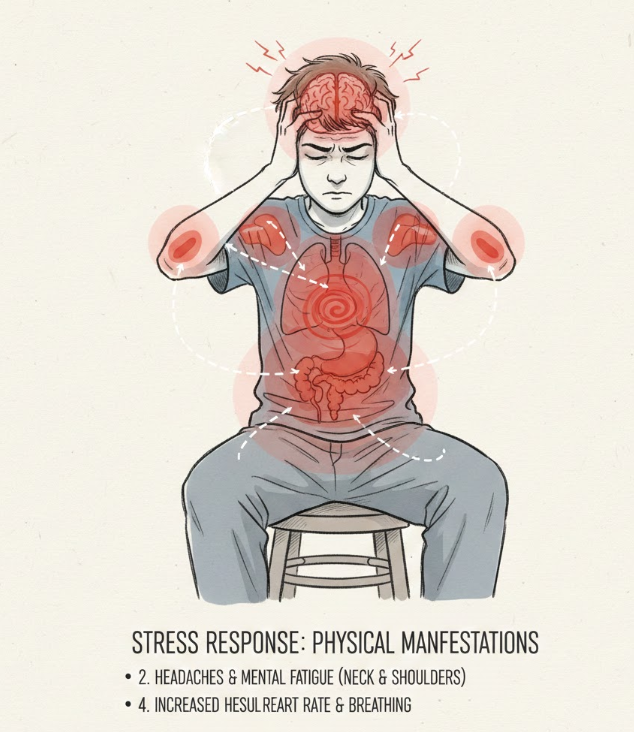
Long-term stress slowly starts affecting:
- Muscles
- Digestion
- Sleep
- Heart
- Immunity
The body stays in “alert mode” even when there is no real danger.
How Stress Shows Up in the Body
Stress rarely comes with one clear symptom.
Instead, it spreads quietly.
Common physical signs of stress include:
- Constant tiredness
- Headaches or body pain
- Tight neck and shoulders
- Poor sleep
- Digestive problems
- Low energy
- Feeling heavy without illness
Many people ignore these signs, thinking they are “normal.”
Stress and Muscle Tension
When you are stressed, your muscles stay tight without you noticing.
This leads to:
- Neck pain
- Back pain
- Jaw tightness
- Body stiffness
Even after resting, the body doesn’t feel relaxed.
That’s why stress-related pain feels confusing — there is no injury, yet the pain is real.
Stress Affects Digestion More Than You Think
The stomach is very sensitive to stress.
Stress can cause:
- Slow digestion
- Gas and bloating
- Loss of appetite
- Overeating
- Stomach discomfort
This happens because the body focuses on “survival” instead of digestion.
A stressed mind often creates an unhealthy gut.
Sleep and Stress Are Deeply Connected
Stress is one of the biggest reasons behind poor sleep.
Even if you sleep for 7–8 hours:
- The sleep may not be deep
- The mind stays active
- The body doesn’t fully recover
That’s why many people wake up tired even after “enough” sleep.
Rest without relaxation does not heal the body.
Stress Weakens the Immune System
Long-term stress slowly weakens your immunity.
This can lead to:
- Frequent colds
- Slow recovery
- Constant weakness
The body spends energy dealing with stress instead of protecting itself.
You may not fall seriously ill, but you don’t feel fully healthy either.
Why We Don’t Realize Stress Is the Cause
Stress doesn’t announce itself clearly.
It hides behind:
- Busy schedules
- “Normal tiredness”
- Daily responsibilities
- Screen addiction
People often treat symptoms instead of addressing stress itself.
But unless stress is managed, the body keeps reacting.
Simple Ways to Reduce Stress Naturally
You don’t need drastic changes.
Small daily habits can make a big difference.
Try these:
- Take short breaks from screens
- Walk for 15–20 minutes daily
- Practice deep breathing or silence
- Sleep and wake up at fixed times
- Eat slowly and mindfully
- Spend time in natural light
- Talk about your feelings instead of holding them inside
Stress reduces when the body feels safe and relaxed.
When Stress Needs Attention
If stress:
- Lasts for months
- Starts affecting daily life
- Causes constant physical discomfort
Then it’s important to take it seriously and seek proper support.
Ignoring stress doesn’t make it go away — it makes it louder.
Final Thoughts
Stress is not always visible, but its effects are real.
Your body remembers what your mind goes through.
If you feel tired, heavy, or uncomfortable without a clear reason,
stress might be the message your body is trying to send.
Listening early can save a lot of pain later.